
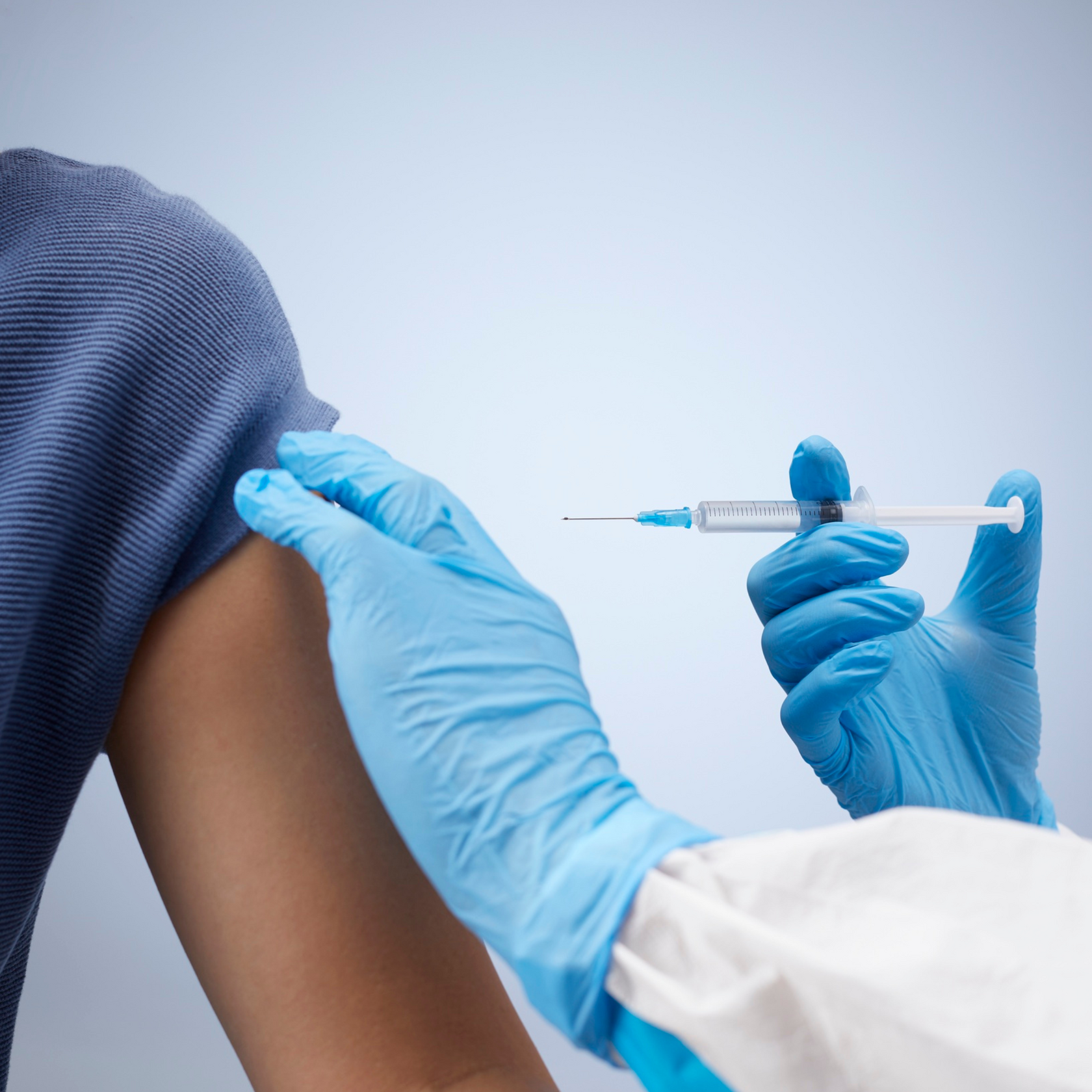
Every year in the last week of April, the World Health Organization (WHO) celebrates World Immunization Week, a global campaign to highlight the saving power of vaccines. This year's theme reminds us that vaccination is not just about childhood; it is one of the most important investments any person can make in their long-term health.
At Positron Diagnostics, we work at the diagnostic end of the health equation, finding the disease promptly and accurately. Vaccines and imaging play different but complementary roles in protecting health. Together, they represent two of the most powerful tools in modern medicine.
Why vaccines matter: The numbers
Vaccination prevents about 3.5-5 million deaths each year, according to the WHO. Diseases that were once fatal or left millions of patients with permanent and serious consequences, such as polio, measles, tuberculosis, are now prevented, controlled, or in some cases completely eliminated through vaccination programs.
However, globally, millions of children and adults remain unvaccinated either due to lack of access, misinformation, or simply because they do not know which vaccines they need as adults. Vaccine-preventable diseases continue to cause significant illness and death, including in Europe.
Vaccines and the immune system
A vaccine works by introducing the immune system to a harmless version of a pathogen or part of it, so that the body can learn to recognise and fight the real one if it encounters it in the future. The immune system "remembers" this encounter, allowing for a faster and stronger response to the actual infection.
What is perhaps less well known is that this immune response, the biological activity caused by both infection and vaccination, is something that PET/CT imaging can detect. The metabolic activity of immune cells responding to a stimulus is visible on a PET scan. This has become relevant in medical research and in understanding immune responses to certain conditions.
Where Imaging Meets Immunology
There are several important crossovers between immune health and what PET/CT can reveal:
•Lymphoma and blood cancers: Cancers of the immune system, including Hodgkin's and non-Hodgkin's lymphoma, are among the tumors where PET/CT examination through FDG administration is the gold standard for staging and monitoring response to treatment in lymphoma.
•Infections in immunocompromised patients: People with weakened immune systems due to HIV, cancer treatment, or immunosuppressive medication are at higher risk of unusual or difficult-to-diagnose infections. PET/CT can quickly identify the source of infection and guide treatment in these vulnerable patients.
•Autoimmune and inflammatory conditions: Conditions where the immune system attacks the body's own tissues, such as vasculitis, sarcoidosis, or inflammatory disease, can be assessed and monitored with PET/CT, showing where active inflammation occurs and whether the treatment is working.
•Post-Infectious Complications: Following severe infections, the PET/CT test has been used to assess residual inflammation, identify affected organs, and explain persistent symptoms.
Prevention and early accurate diagnosis work together as two sides of the same commitment to health.
Talk to your doctor or healthcare provider about vaccines recommended for your age, health status, and medical history. Staying informed is one of the simplest things you can do for your long-term health.
Contact Phone: +357 22 053 555
Address: 215 Spyrou Kyprianou Avenue, 2047 Strovolos, Nicosia